
Water Damaged Drywall in Atlanta? Here’s Why It Happens So Often
More than most, homeowners in Atlanta have to deal with water damage. Every summer, Fulton County gets heavy thunderstorms in the afternoon. The plumbing in older homes in Inman Park and Buckhead is getting old, and the humidity that keeps everything damp from April to September makes it even worse. Water-damaged plasterboard is one of the most common and expensive home repair problems in the city. A yellow stain on the ceiling, a soft spot on the bathroom wall or paint bubbling near a window are all signs of a problem that gets worse and more expensive every day.
Key Insight: Mould can start to grow inside plasterboard in Atlanta’s humid climate within 24 to 48 hours of being wet. The repair will be smaller and less expensive if you act quickly.
Why Atlanta Homes Are So Vulnerable to Drywall Water Damage
Because of the heavy rain, high humidity in the summer, and many old homes in Atlanta, it is almost certain that plasterboard will get damaged by water.
Heavy Rain and Storm Season
- Atlanta gets more than 50 inches of rain a year, which is a lot more than the national average of 38 inches. Thunderstorms in the spring and summer are strong and quick. They send water into wall and ceiling cavities through roof holes, window seals, and gaps in the foundation.
Humidity All Year
- Most of the year, Atlanta’s average relative humidity is over 70%. When plasterboard gets wet, it takes a long time to dry, which gives the mould the time it needs to grow. In a city with a dry climate, small amounts of water that get in and dry out don’t always dry out in Atlanta.
Old Housing Stock
- There are thousands of homes in neighbourhoods like East Atlanta, Kirkwood, Vine City, and Cascade Heights that were built between the 1930s and 1970s. Many of them have original galvanised steel plumbing that rusts from the inside out, causing slow pinhole leaks behind walls that soak plasterboard for weeks before any signs appear on the surface.
A Real Atlanta Example: Kirkwood:
A homeowner saw small bubbles in the paint near their kitchen backsplash. A moisture meter showed that the plasterboard had been wet for 2 to 3 weeks because a supply line had corroded. Two wall panels and the base of the cabinet next to them were damaged. The cost of repairs was $1,400, which is about three times what it would have cost to get help early.
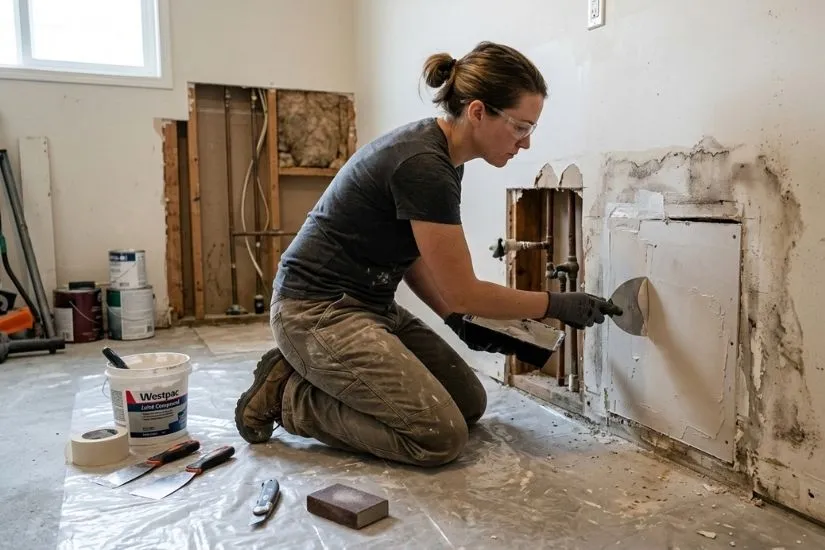
Six Warning Signs You Have Water Damaged Drywall
- Yellow or Brown Ceiling Stains: Discoloured rings spreading across your ceiling almost always indicate water pooling above from a roof leak, plumbing failure, or HVAC condensate overflow.
- Bubbling or Peeling Paint: Paint separates from drywall when moisture gets between the two surfaces. Common near bathrooms, kitchens, or exterior walls.
- Soft or Spongy Wall Texture: Press gently on any discoloured area. Water-damaged drywall feels soft or crumbles slightly the gypsum core is compromised and needs full replacement.
- Persistent Musty Odour: A musty smell in a room is a reliable sign of hidden mould already active inside walls or ceiling cavities.
- Visible Mould Growth: Black, green, or white patches on drywall surfaces mean the interior is almost certainly heavily affected. Always requires full panel replacement.
- Sagging or Bowing Ceiling Panels: A saturated ceiling panel can collapse without warning. Never ignore sagging drywall.
- Atlanta Reality Check: Most homeowners discover water damage during pre-sale home inspections. At that point, a $350 patch repair has often become a $2,500 remediation job. Early detection always costs less.
For Atlanta homes in high-humidity zones, bathrooms, basements, and laundry rooms—standard drywall replacements are not always the smartest choice. Our guide to mold-resistant drywall installation in Fulton County explains when upgrading to moisture-resistant board is the right long-term investment.
Real Repair Costs: What Atlanta Homeowners Pay in 2025–2026
| Damage Scenario | Estimated Cost Range | Notes |
|---|---|---|
| Small patch / surface stain | $150 – $400 | No mold, caught within 24–48 hrs |
| Single wall panel replacement | $400 – $900 | Hang, tape, mud, finish, prime |
| Bathroom drywall repair | $800 – $1,800 | Higher with moisture-resistant board |
| Ceiling water damage repair | $500 – $1,500 | Depends on area size and cause |
| Full room replacement | $1,500 – $4,000+ | Includes mold treatment if needed |
| Basement drywall replacement | $2,000 – $6,000+ | Moisture barrier + mold-resistant board |
| Mold remediation + drywall | $2,000 – $6,000+ | Average mold removal in Atlanta ~$2,000 |
Pro Tip: If you act within 24 hours of getting water on your stuff, you can save 40–60% on the total cost of repairs. Sometimes, professional drying equipment can save plasterboard entirely, which means you won’t have to pay for new materials or labour to replace it.
A Real Atlanta Example: Buckhead
A homeowner discovered that their finished basement had gradually been soaking up moisture from an overflowing HVAC condensate pan for three weeks. By the time it was caught, mould had already spread across two full walls. As a result, the entire panel had to be removed, the studs treated, and the mould fully remediated. Furthermore, moisture-resistant board had to be installed throughout the affected area. In total, the repair came to $4,200 — roughly three times what it would have cost had the problem been caught during week on
Our guide to Level 5 drywall finishing services explains why the highest finish standard makes the most sense after major water damage reconstruction if you need to rebuild a whole room.
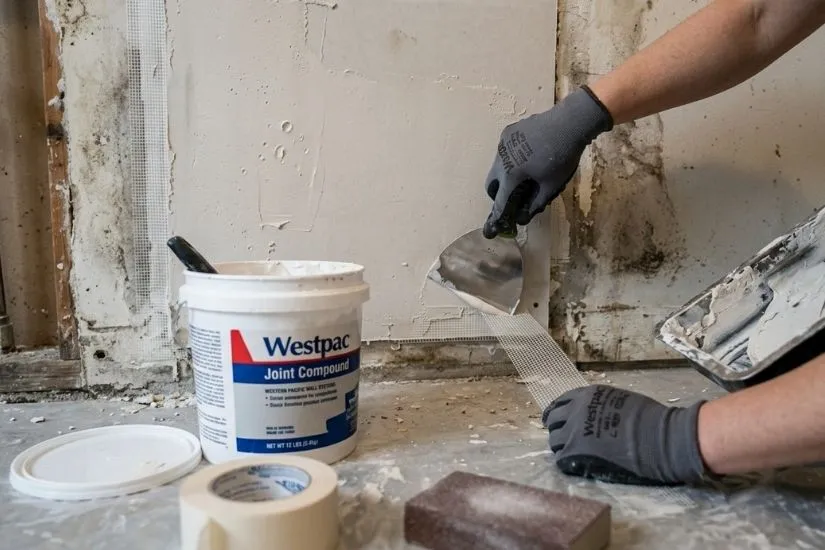
The Repair Process – Step by Step
- Step 1: Confirmed that the source has stopped
Don’t touch the plasterboard until the water source is completely stopped. If you replace plasterboard over a leak that is still going on, you are wasting money.
- Step 2: Mapping the Moisture
A moisture meter shows the full range of saturation, even in places that look dry but still have high moisture content inside the wall cavity.
- Step 3: Drying the Structure
If you catch clean water damage early enough, professional air movers and dehumidifiers can dry out plasterboard in place in three to five days, which could mean you don’t have to replace it at all.
- Step 4: Take off the broken panel
Any plasterboard that has too much moisture or shows mould is cut out and sent to the nearest stud. This makes clean edges for the new panels.
- Step 5: Getting Rid of Mould
Before new plasterboard goes in, the exposed framing and holes are fixed. Putting new plasterboard over mouldy areas can lead to full re-remediation costs within a few months.
- Step 6: Install new plasterboard, finish it, and match the texture
New panels are put up, taped, and finished with several coats of joint compound. The primer is put on after the texture is matched—smooth, knockdown, or orange peel.
Atlanta Water Damage Doesn’t Wait – Neither Should You
Your Drywall Solution specializes in water damage drywall repair across Atlanta, Fulton County, and metro Georgia. From single ceiling stains to full room reconstruction — we assess fast, quote honestly, and finish clean. No subcontractors. No surprises. Free estimates always.
📍 Serving Atlanta, Fulton, Henry, Coweta, Fayette, Spalding & Hampton | Same-Day Estimates Available
Book Your Free Inspection With Your Drywall Solution or 678 699 4353