
Mold Resistant Drywall: What Fulton County Homeowners Need to Know?
If you live in Fulton County, you know that humidity isn’t just a summer thing – it’s a year-round roommate. In neighborhoods like College Park, East Point, and South Fulton, that persistent Georgia moisture has a habit of quietly eating away at standard drywall from the inside out.
At Your Drywall Solution, we’re seeing more and more of our neighbors switch to mold-resistant drywall before the musty smells start. If you’re planning a renovation or dealing with a repair, here’s the honest breakdown of what you actually need to know.
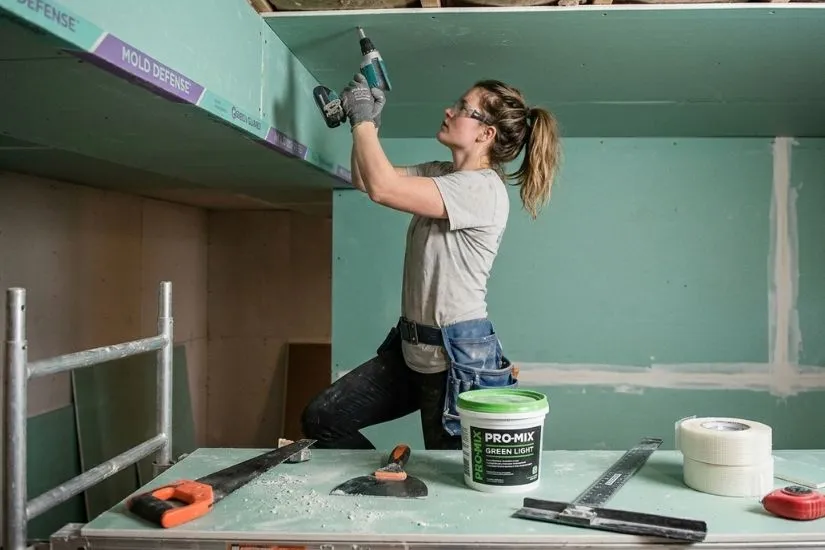
What Is Mold Resistant Drywall?
Standard drywall is essentially a “gypsum sandwich” with paper bread. Mold loves paper. Mold-resistant drywall replaces that paper with materials like fiberglass or specialized wax coatings that give mold spores nowhere to grow.
In Georgia, you’ll mostly see these three:
- Green Board: Think of this as “water-resistant-ish.” It’s great for laundry rooms but shouldn’t be used where it’ll get directly splashed.
- Purple Board: This is our “MVP” for Fulton County bathrooms and kitchens. It’s reinforced with fiberglass to handle the steam from your morning shower.
- Cement Board: This is the heavy-duty stuff. If you’re tiling a shower, this is the only thing that should be behind those tiles.
A quick reality check: “Mold-resistant” doesn’t mean “mold-proof.” If you have a pipe burst, even the best drywall needs help. Think of it as an insurance policy that buys you time.
For water damage that has already happened, see our related guide: [Ceiling Water Damage Repair in Henry County: Fast Drywall Patching].
The “Red Clay” Factor: Why Fulton County Basements Are Different
A common concern for homeowners in areas like Hapeville and Fairburn is the unique behavior of Georgia’s famous red clay soil.
Unlike sandy soil that drains quickly, our dense red clay acts like a sponge, expanding significantly when wet and shrinking when dry. This constant “push and pull” creates immense hydrostatic pressure against basement walls, often leading to tiny hairline cracks. Because clay retains water for so long, moisture stays trapped against your foundation, slowly seeping into your basement and saturating standard drywall. If you are finishing a basement in Fulton County, using mold-resistant materials is your first line of defense against this “clay-trapped” moisture.
Where Should You Use It?
In our humid subtropical climate, the risk zones inside your home are broader than most people realize:
- Bathrooms: Purple board on all walls; cement board behind tile.
- Kitchens: Essential for walls behind the sink and stove.
- Basements: Non-negotiable due to the clay soil and drainage challenges mentioned above.
- Laundry Rooms: A single hose failure can saturate standard drywall within hours.
Real-Life Example: What Happens When You Skip It
A homeowner in Johns Creek noticed a musty smell in their master bathroom for months. When a contractor opened the wall, they found a pinhole pipe leak had been silently saturating standard drywall. Mold had spread across three full sheets.
- Total remediation and repair cost: Over $4,200.
- Material cost to have used purple board originally: Around $80–$120.
This scenario plays out constantly across metro Atlanta – and it’s entirely preventable with the right materials upfront.
What Does It Cost in 2026?
| Product | Per Sheet (4×8) | Best Use Case |
| Standard Drywall | $9–$13 | Bedrooms / Living Areas |
| Green Board | $13–$18 | Laundry / Powder Rooms |
| Purple Board | $17–$24 | Bathrooms / Basements |
| Cement Board | $12–$17 | Shower Backing / Tile |
Labor in Fulton County runs approximately $1.50–$3.00 per square foot for professional installation. For an accurate local estimate, the team at Your Drywall Solution provides free consultations to ensure you get the right materials for your specific home.
DIY or Professional?
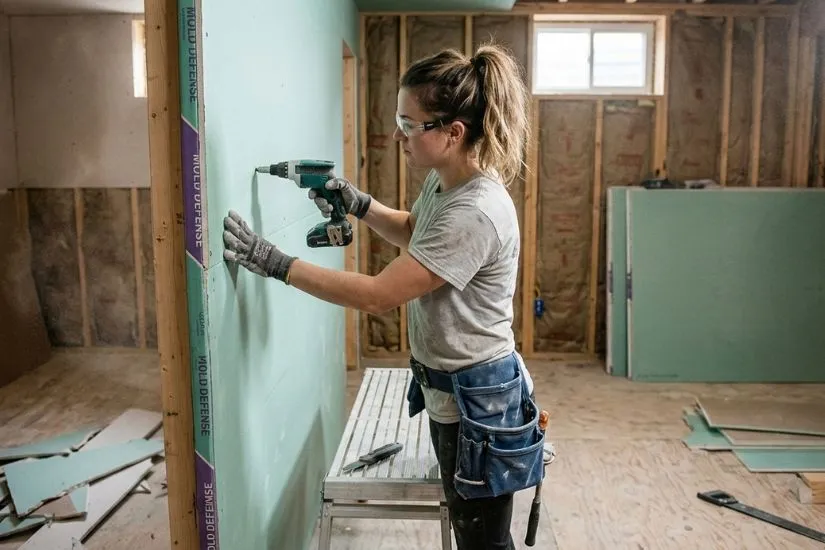
Hanging mold-resistant drywall is manageable for experienced DIYers, but professional drywall installation is often worth it for moisture-heavy zones. Existing mold must be remediated before new drywall goes in, and basement renovations involve vapor barriers that are easy to get wrong.
Conclusion
Mold-resistant drywall is one of the smartest, lowest-cost upgrades a Georgia homeowner can make. A few extra dollars per sheet now is nothing compared to a four-figure remediation bill later.
If you’re planning a bathroom, basement, or water-damage repair project in Fulton, Henry, or Fayette County, we are ready to help.
Call Your Drywall Solution today at 678-699-4353 for a free estimate and professional moisture-resistant installation